
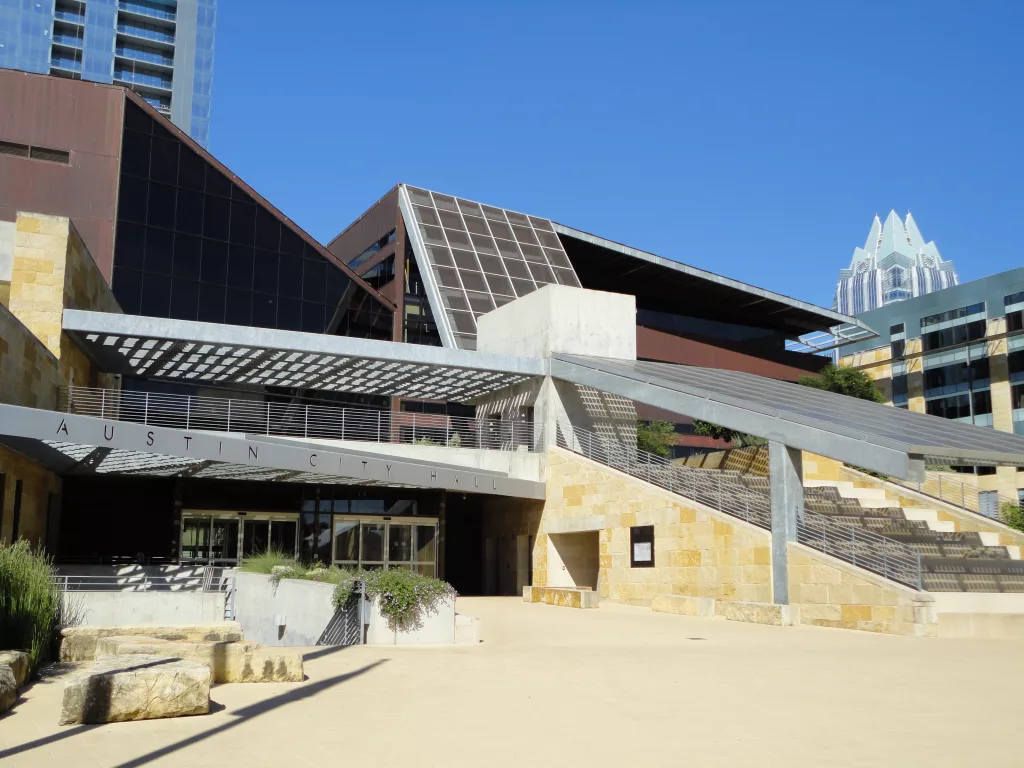
The Austin City Council on Thursday approved a resolution aimed at expanding so-called “missing middle” housing options across the city, part of an ongoing effort to address affordability and reshape development patterns.
The resolution directs city staff to begin drafting changes to Austin’s Land Development Code that would allow for a broader range of housing types—including townhomes, duplexes, triplexes, fourplexes, and cottage-style developments—along with new mixed-use zoning districts.
“Missing middle” housing refers to small- to medium-scale residential developments that fall between single-family homes and large apartment complexes. These housing types were once common in older neighborhoods but have become rare under modern zoning rules.
City leaders say bringing back those options could help increase housing supply and provide more attainable price points for residents.
According to city documents, Austin’s current land development code—largely dating back to the 1980s—has limited housing diversity and contributed to rising costs by favoring either single-family homes or large multifamily projects.
City planners argue that expanding missing middle housing could:
- Increase housing choices across different income levels
- Improve walkability and access to jobs and services
- Make better use of existing infrastructure
- Reduce urban sprawl and long commutes
The resolution also follows a recent city study that found less than one percent of Austin’s housing stock built since 1984 qualifies as “missing middle.”
Rather than immediately changing zoning rules, the measure initiates the process for future amendments. City staff are now tasked with developing new zoning categories that would:
- Allow smaller multi-unit housing on residential lots
- Encourage mixed-use developments combining housing and retail
- Reduce regulatory barriers that currently limit these projects
The proposal also calls for public input and further analysis before any final code changes are adopted.
City staff are expected to return to council with proposed code amendments by March 2027. If approved, those changes would determine where and how missing middle housing could be built across Austin.
The issue is likely to remain a point of debate, as city leaders balance the need for more housing with concerns from neighborhoods about density and development.