The Austin City Council has approved a plan to install digital kiosks across the city, a move officials say will modernize public spaces and generate new revenue—but one that is already drawing criticism from community members and local boards.
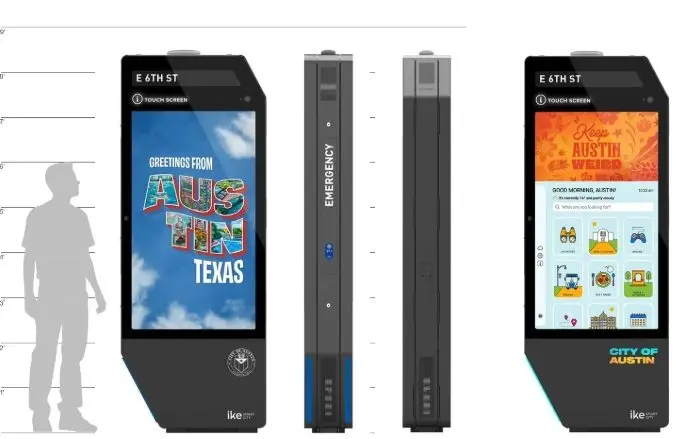
The kiosks, expected to be placed in high-traffic areas such as downtown and along major transit corridors, will provide interactive features including maps, transit information, and listings for nearby businesses and events.
City leaders say the kiosks are designed to serve as a public resource while also generating income through advertising.
Under the agreement, the city will partner with a private vendor to install and operate the kiosks at no upfront cost. Revenue will come from digital ads displayed on the screens when they are not in use, with the city expected to receive at least $2 million annually, with the potential for more depending on ad performance.
The kiosks are also expected to include:
- Wayfinding tools for pedestrians
- Real-time transit updates
- Public service announcements
- Emergency communication features
Supporters say the kiosks will help residents and visitors navigate the city more easily while promoting local businesses and events.
City officials have framed the kiosks as a “smart city” upgrade that improves access to information while bringing in new revenue without raising taxes.
They also point out that similar kiosks are already in use in other major cities and can serve as hubs for community information, tourism, and local culture.
Additionally, some officials have emphasized that the kiosks will not collect personal data or include surveillance features, addressing one of the early concerns raised by critics.
Despite those assurances, the plan has faced significant pushback from some residents, advocacy groups, and city commissions.
One major concern centers on advertising. Austin has long maintained restrictions on off-premise advertising—ads not tied to a nearby business—but the kiosk plan would create an exception, allowing digital ads in public right-of-way spaces.
Critics argue that could fundamentally change the look and feel of the city.
Some planning and environmental officials have warned the kiosks could open the door to more widespread digital advertising, raising concerns about visual clutter and the commercialization of public spaces.
Others have raised additional issues, including:
- Privacy concerns, particularly related to Wi-Fi capabilities and potential data tracking
- Public safety concerns, including whether digital screens could distract drivers
- Limited public input, with some arguing the plan moved forward too quickly
Community advocates have also questioned whether the project prioritizes revenue over community needs.
City staff will now move forward with finalizing kiosk locations, design standards, and operational guidelines.
Initial installations are expected to focus on downtown and other high-traffic areas, with rules governing brightness, placement, and content.
As the rollout begins, the kiosks are likely to remain a point of debate in Austin, highlighting broader questions about how public space is used—and who gets to shape it.