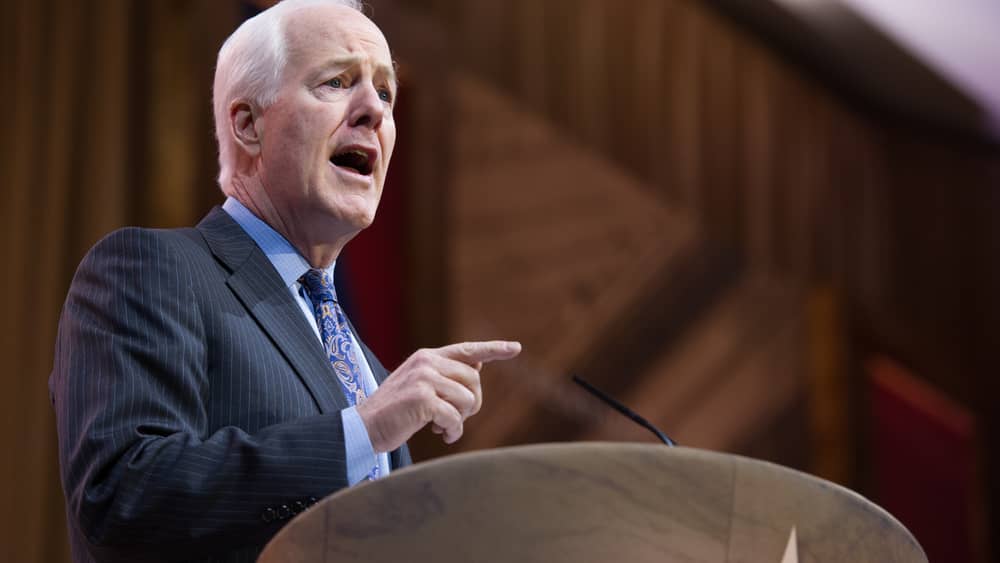
U.S. Senator John Cornyn is backing new legislation aimed at preventing members of Congress from receiving pay during a government shutdown.
Cornyn announced he has cosponsored the “No Shutdown Paychecks to Politicians Act,” a bill led by John Kennedy that would withhold pay from lawmakers if Congress fails to pass funding legislation to keep the federal government running.
“If an everyday American fails to meet the requirements of their job, they don’t earn a paycheck,” Cornyn said in a statement. “If Representatives and Senators can’t perform a fundamental duty of Congress that Americans elected them to do – funding the government – they shouldn’t earn a paycheck either.”
According to Cornyn’s office, the proposal would block members of Congress from receiving pay during any lapse in federal funding, which the bill defines as a shutdown affecting one or more government agencies.
The legislation recently passed out of the Senate Rules Committee with unanimous support but has not advanced further after being blocked from a full Senate vote.
Government shutdowns occur when Congress fails to approve spending bills or temporary funding measures, leading to partial closures of federal agencies. During those periods, many federal employees are furloughed or required to work without pay until funding is restored.
However, under current law, members of Congress continue to receive their salaries during shutdowns, a point that has drawn criticism from both parties over the years.
Supporters of the bill argue it would increase accountability and incentivize lawmakers to reach funding agreements more quickly. Critics, however, have raised questions in the past about whether such measures would be effective or constitutional, noting that congressional pay is governed by the 27th Amendment, which limits how changes to compensation can take effect.
With the bill stalled in the Senate, it remains unclear whether the proposal will receive a vote in its current form.
Still, the issue of congressional pay during shutdowns is likely to remain part of broader negotiations as lawmakers continue to grapple with federal funding deadlines and the threat of future shutdowns.