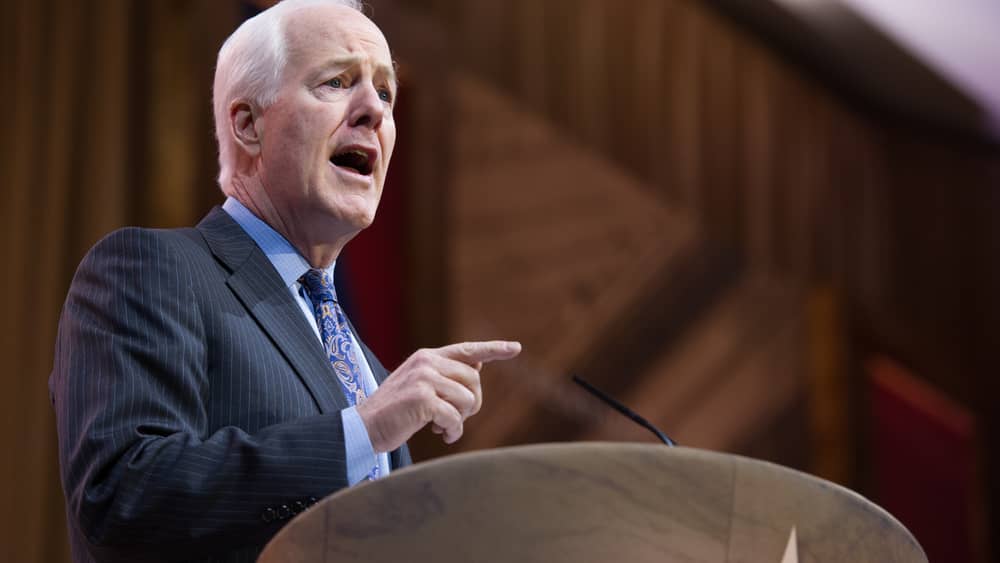
U.S. Senator John Cornyn is backing new legislation that would deny immigration benefits to non-citizens who advocate for the implementation of Sharia Law in the United States.
Cornyn discussed the proposal, known as the Ban Outsiders Openly Touting (BOOT) Sharia Law Act, during remarks on the Senate floor last week. The bill would block certain immigrants from obtaining asylum, green cards, or other immigration benefits if they support imposing Sharia Law or advocate against the U.S. form of government.
The legislation would also expand the authority of the U.S. Department of Homeland Security to revoke green cards or deny immigration benefits to individuals accused of supporting terrorism or terrorist organizations.
Cornyn said the bill was prompted in part by concerns surrounding EPIC City, a proposed Muslim-centered development tied to the East Plano Islamic Center in Josephine, Texas. Critics of the project, including Cornyn and several state officials, have argued the development raises concerns about religious discrimination and the potential influence of Sharia Law. Supporters of the project have denied those accusations and said the development is intended to be an inclusive community that complies with all local, state, and federal laws.
During his Senate remarks, Cornyn said the United States should not allow individuals to “undermine our Constitution” by advocating for religious laws that conflict with American legal principles. He also argued the country was founded on freedoms including religion, speech, and equality under the law.
The bill is cosponsored by Tim Sheehy and builds on previous efforts by Cornyn targeting the use of foreign legal systems in American courts. Cornyn has also supported the No Sharia Act, legislation that would prohibit courts from enforcing foreign laws or judgments deemed inconsistent with the U.S. Constitution.
The proposal comes as debate continues nationally and in Texas over immigration policy, religious freedom protections, and the limits of federal immigration enforcement authority.