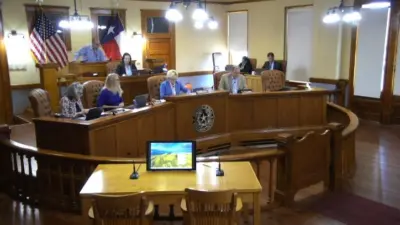
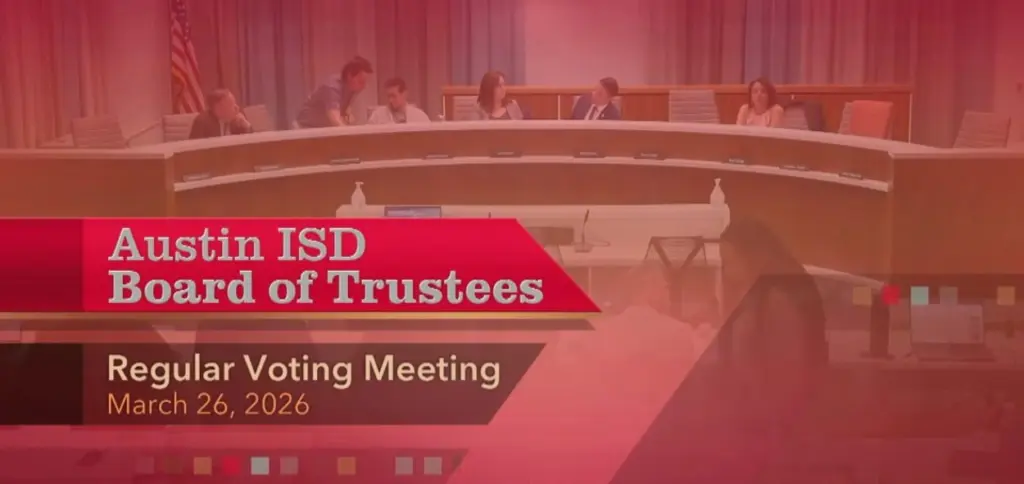
The Austin Independent School District Board of Trustees voted Thursday night to approve a partnership with the Texas Council for International Studies, a move aimed at improving academic performance at three struggling middle schools while avoiding potential state intervention.
The agreement will place Burnet, Dobie, and Webb middle schools under the operation of the nonprofit organization beginning in the 2026–27 school year. The partnership is expected to last at least three years and is being pursued under a state law that allows outside entities to manage campuses in need of turnaround efforts.
The decision comes as those three campuses face mounting pressure from the Texas Education Agency due to repeated failing academic ratings.
All three schools have received four consecutive failing grades under the state’s accountability system. If any campus receives a fifth, state law allows the commissioner of education to take significant action—including closing the school or replacing the district’s elected board with a state-appointed board of managers.
District leaders say the partnership is one of the last available options to maintain local control.
Under the state’s SB 1882 framework, bringing in an outside partner provides a temporary reprieve from state accountability ratings—typically two years—while the organization works to improve student performance.
The Texas Council for International Studies will take over day-to-day campus operations while working alongside district leadership. The goal is to accelerate academic gains, particularly in reading and math, and potentially expand programs such as International Baccalaureate curriculum offerings.
The partnership also brings additional state funding tied to student enrollment, giving campuses more resources to support improvement efforts.
Austin ISD officials have acknowledged this was not their preferred path. The district had previously attempted internal “restart” strategies to improve the campuses, but leaders determined those efforts alone might not be enough to avoid state intervention.
Despite recent academic gains at the schools, trustees ultimately chose the partnership route as a safeguard against losing local control of the district.
With board approval secured, Austin ISD must submit its partnership application to the Texas Education Agency by a state deadline. The state will then review the agreement before final implementation.
If approved, the partnership is expected to begin next school year, with the outside operator tasked with improving outcomes and helping the campuses reach passing accountability ratings.